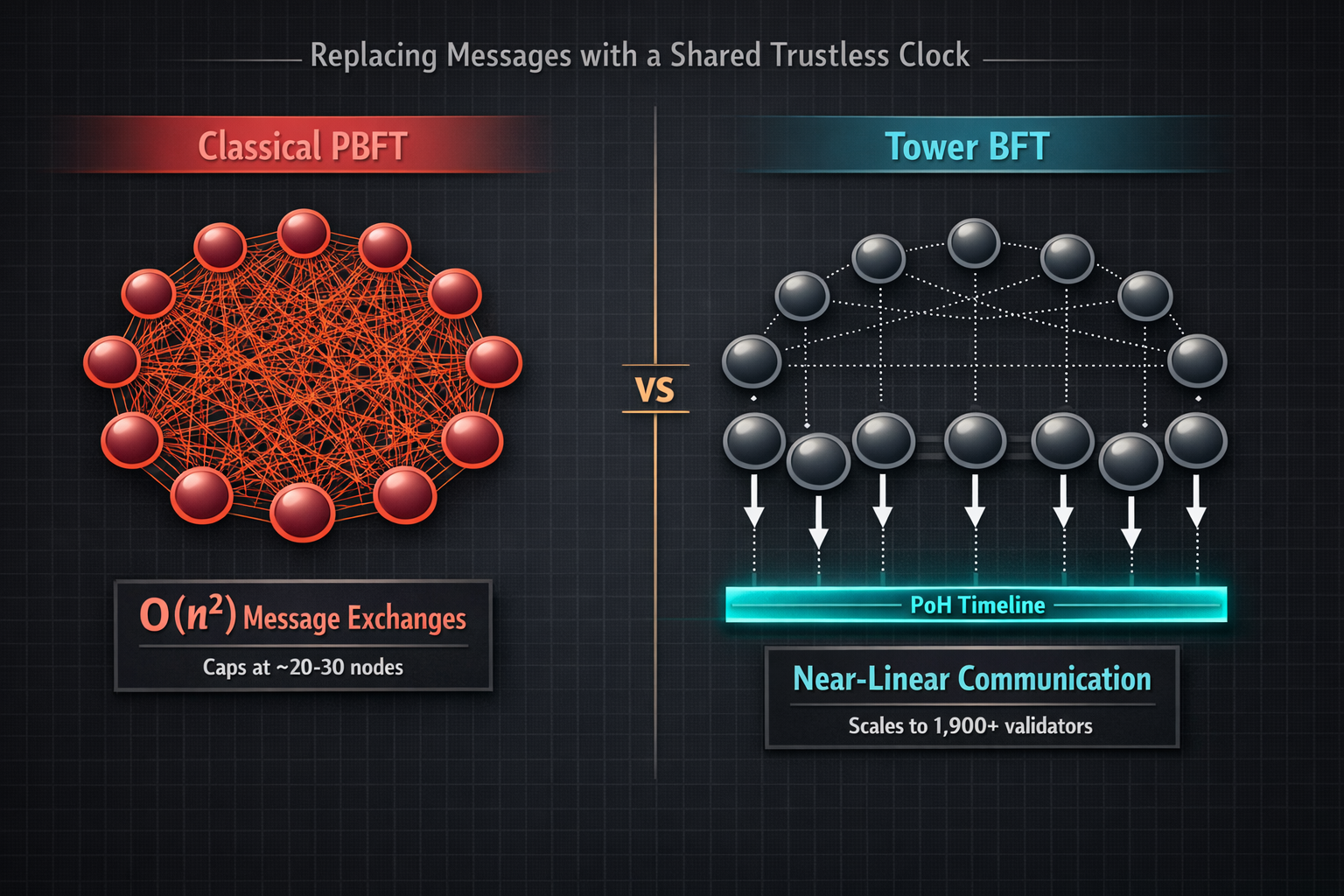
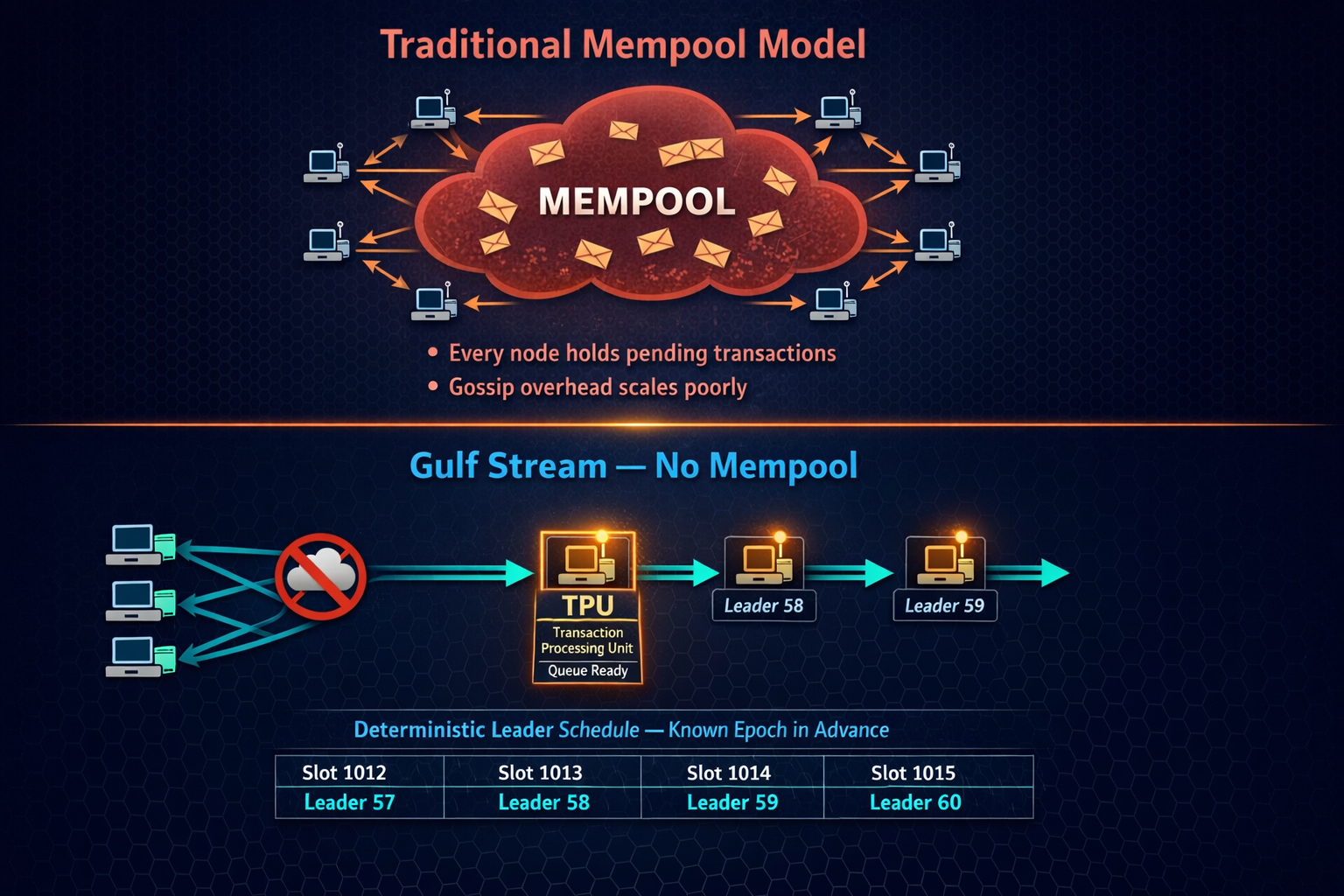
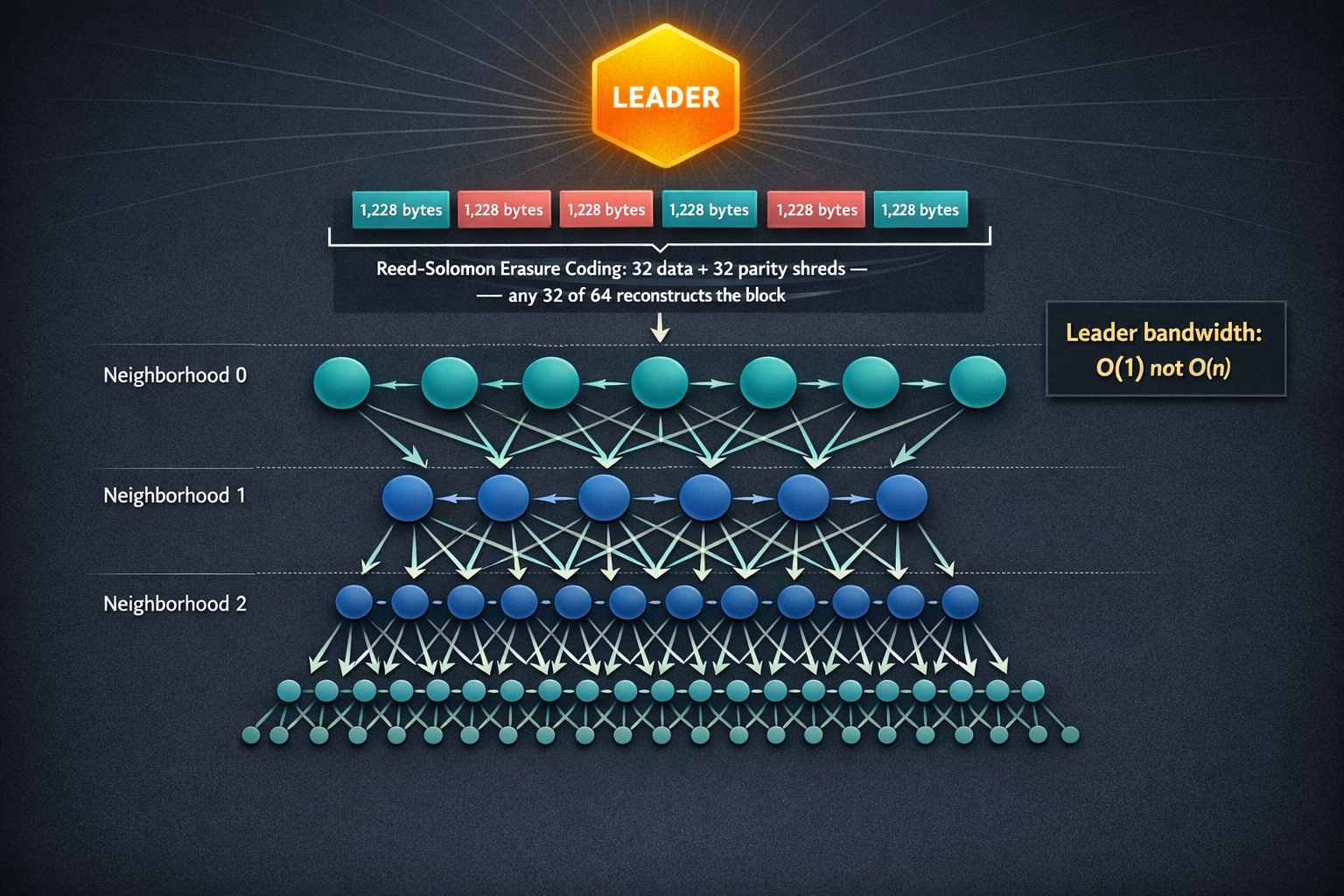
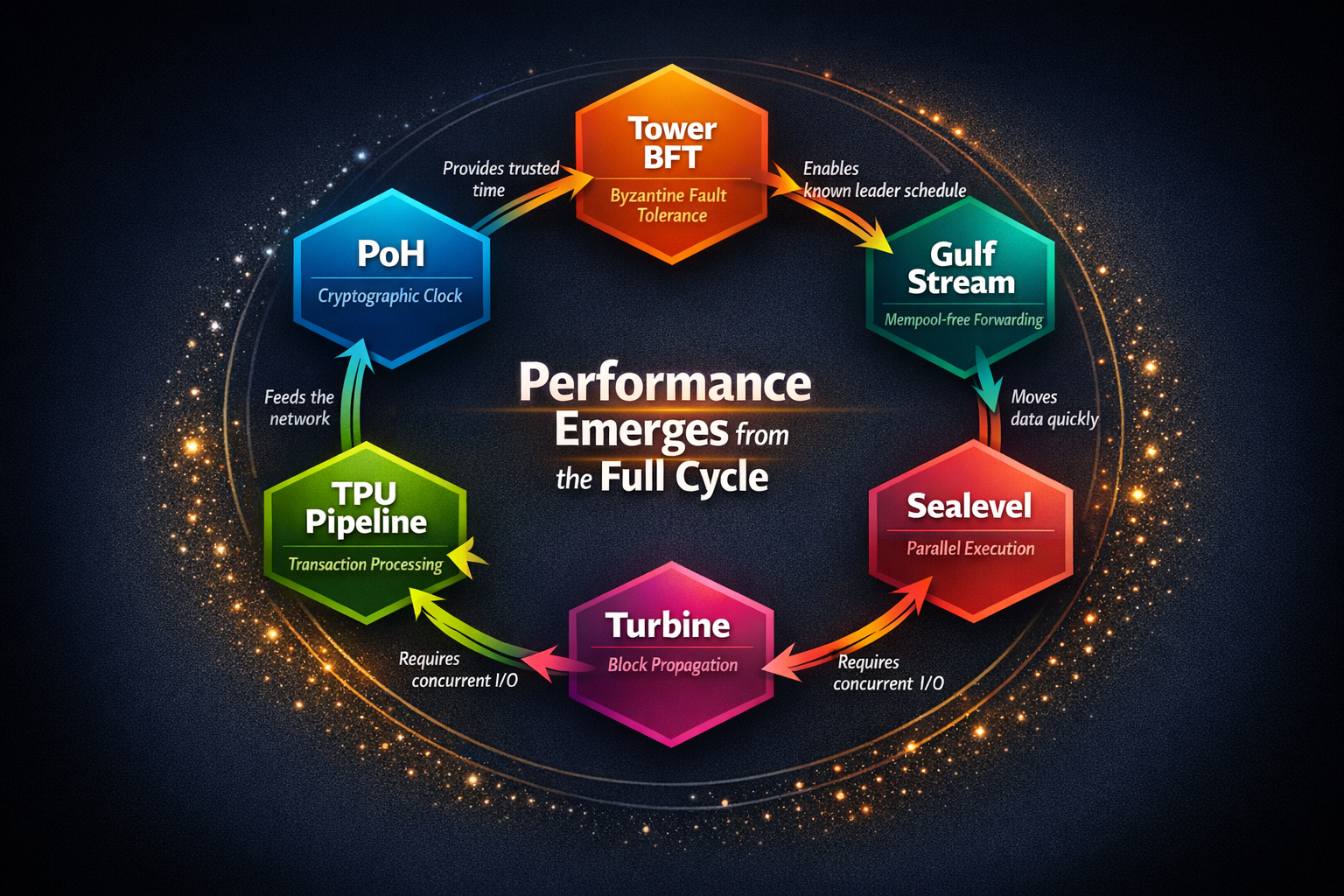
Most coverage frames Solana as "fast Ethereum." That framing obscures the actual design decision. Solana is a monolithic chain that treats hardware as a scaling lever rather than an externality to minimise. Every subsystem — clock, consensus, propagation, execution, storage — was co-designed to saturate modern server hardware: many-core CPUs, NVMe SSDs, and 1 Gbps+ network links. The result is an architecture that cannot be understood by examining any single component in isolation. Pull one piece out, and the performance story collapses.
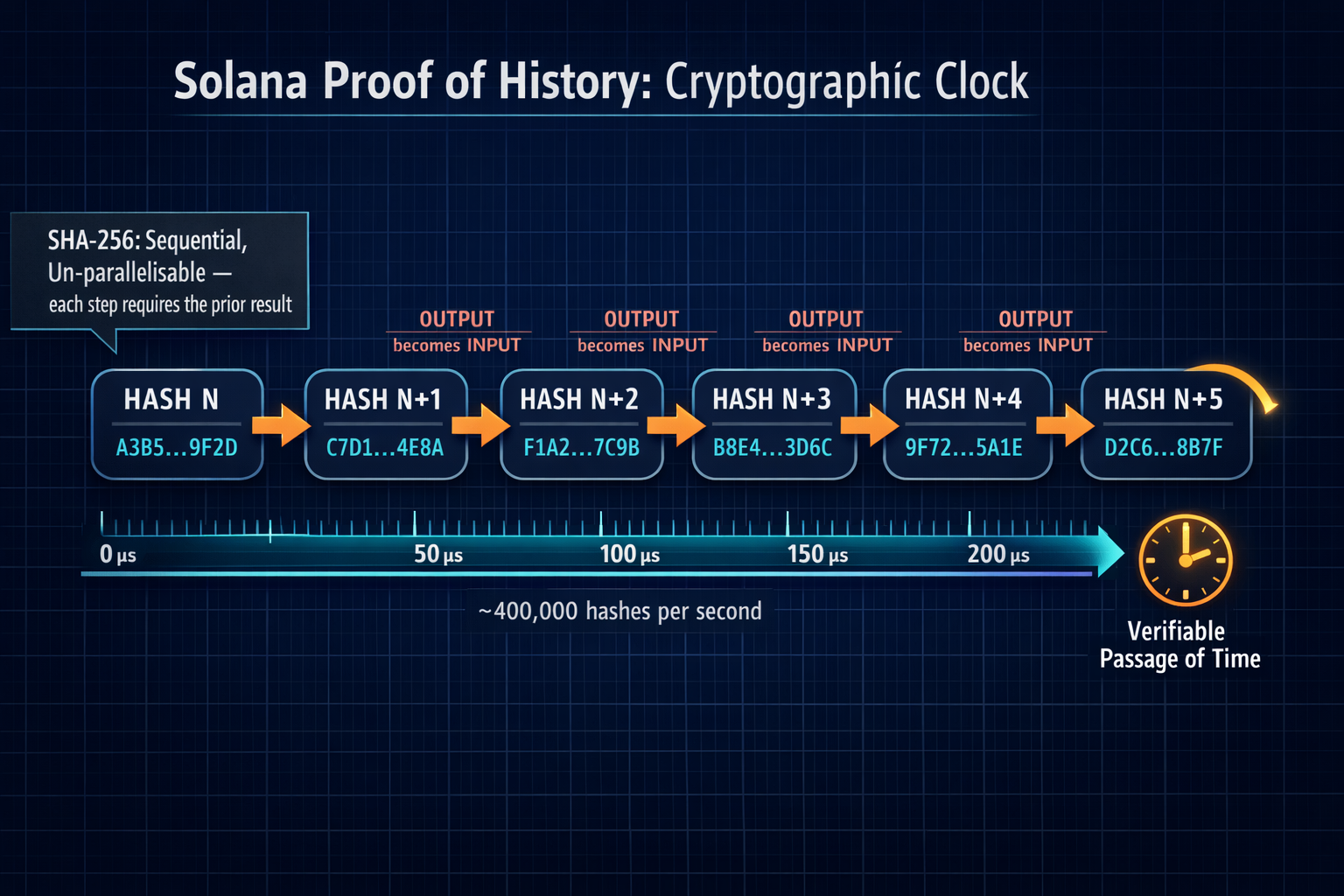
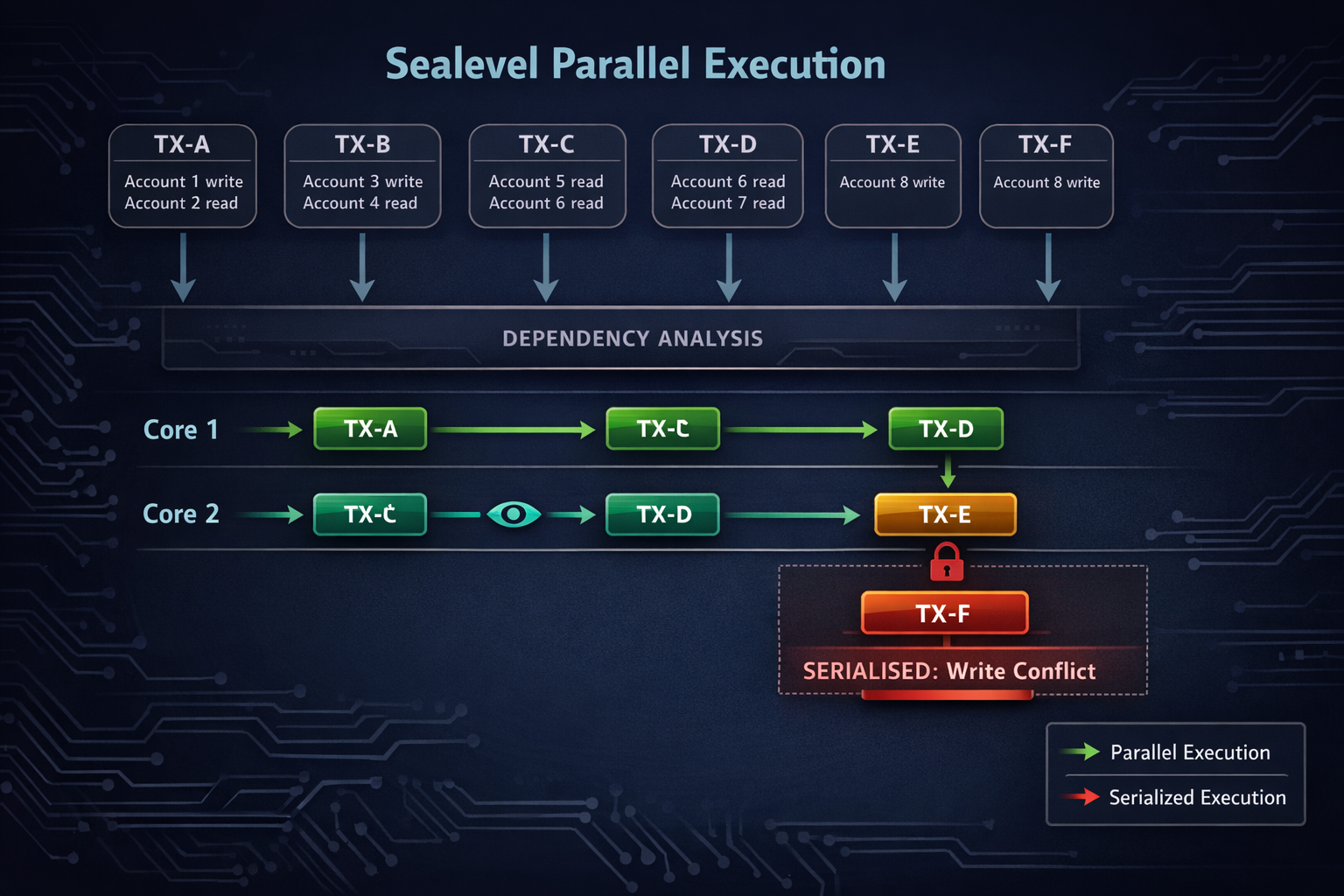
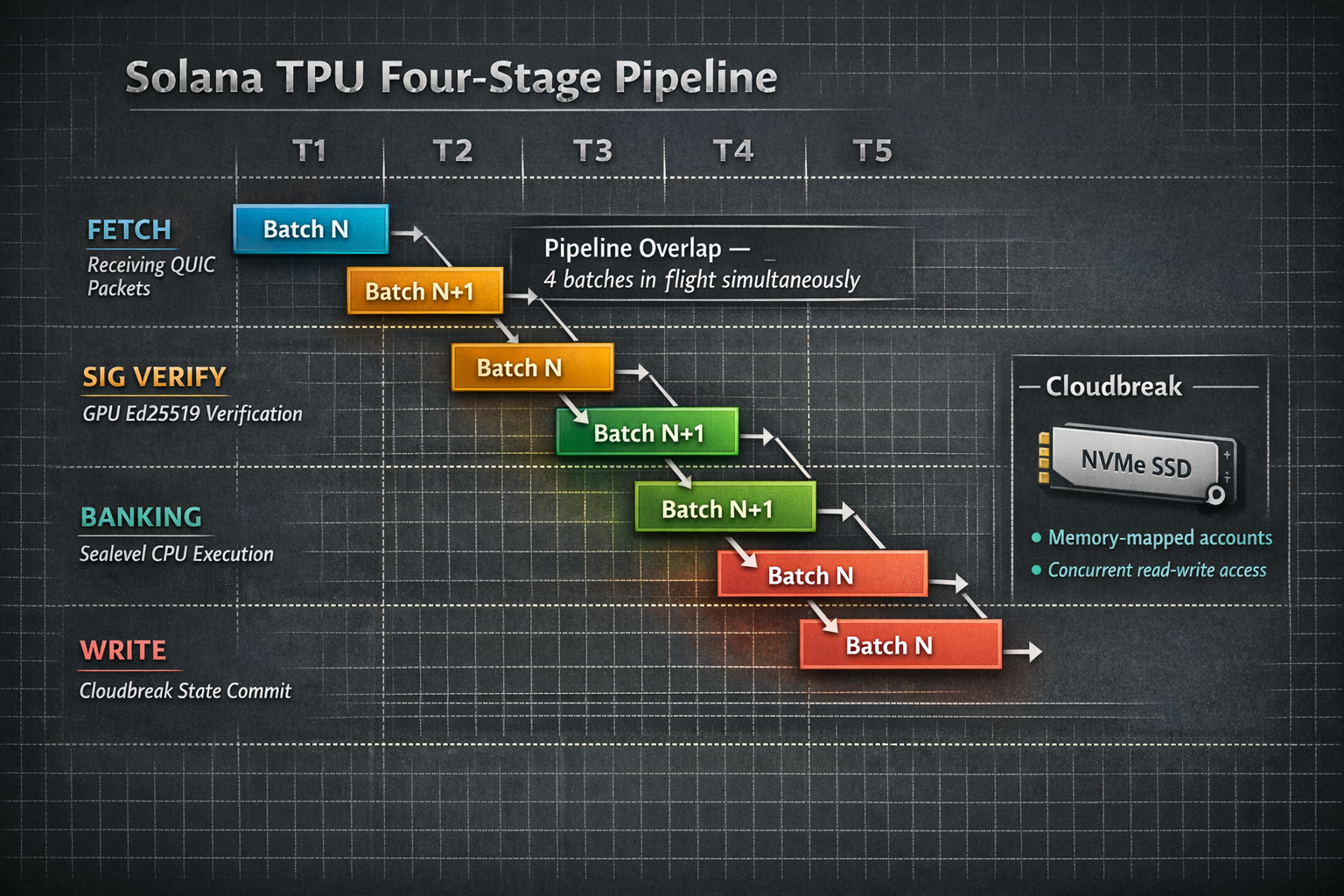
Anatoly Yakovenko's background at Qualcomm, designing CDMA wireless systems, is not incidental colour. Wireless protocols must establish precise time synchronisation across distributed nodes under adversarial radio conditions. The core Solana insight, articulated in the 2017 whitepaper, was: if you can establish a trustless ordering of events before consensus, you can pipeline every other operation — signature verification, execution, propagation, state writes — in parallel. That single idea, Proof of History, became the foundation on which seven other subsystems were layered.
This bet was explicitly against the modular thesis that Ethereum adopted with its rollup-centric roadmap. By March 2026, both approaches have delivered real results. Ethereum's L2 ecosystem processes significant aggregate volume; Solana's monolithic L1 processes more individual transactions than any other base layer, with non-vote throughput consistently between ~800 and ~2,000 TPS and total throughput (including consensus votes) between ~2,500 and ~5,000 TPS. Neither number approaches the frequently cited 65,000 TPS figure, a theoretical maximum from 2020 testnet conditions that has never materialised on mainnet. A practitioner always separates non-vote from vote transactions — roughly 60–80% of all Solana transactions are validator vote messages, which is consensus overhead, not user activity.
The trade-off is real and worth stating directly: Solana requires validator hardware that costs ~$1,000–3,000 per month to operate (256 GB+ RAM, 24+ CPU cores, 2 TB+ NVMe, 1 Gbps symmetric bandwidth). Ethereum beacon chain validators run on a Raspberry Pi. This is not a bug in Solana's design — it is the design. Whether that trade-off is acceptable depends on what you optimise for, and the honest answer is that reasonable engineers disagree.