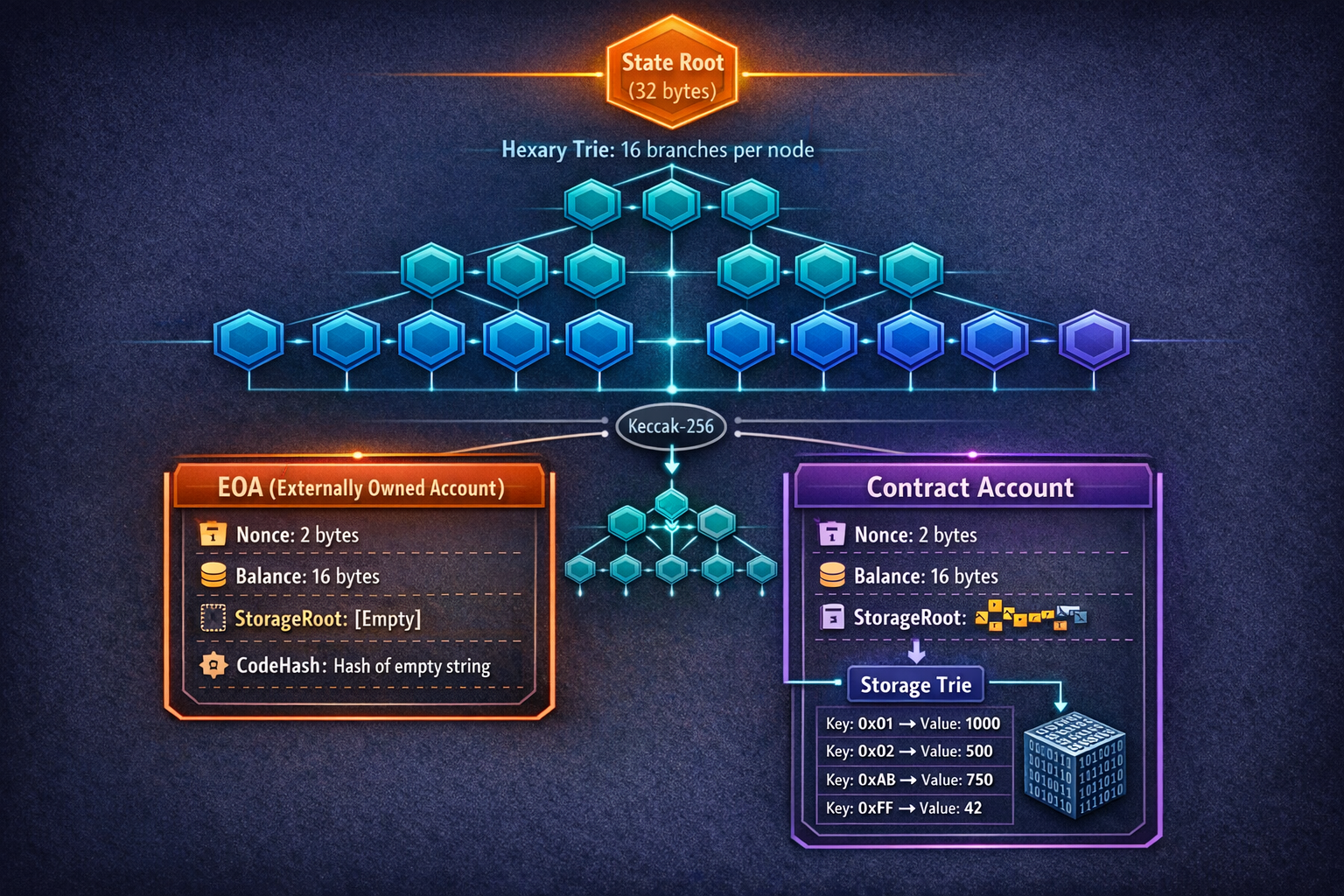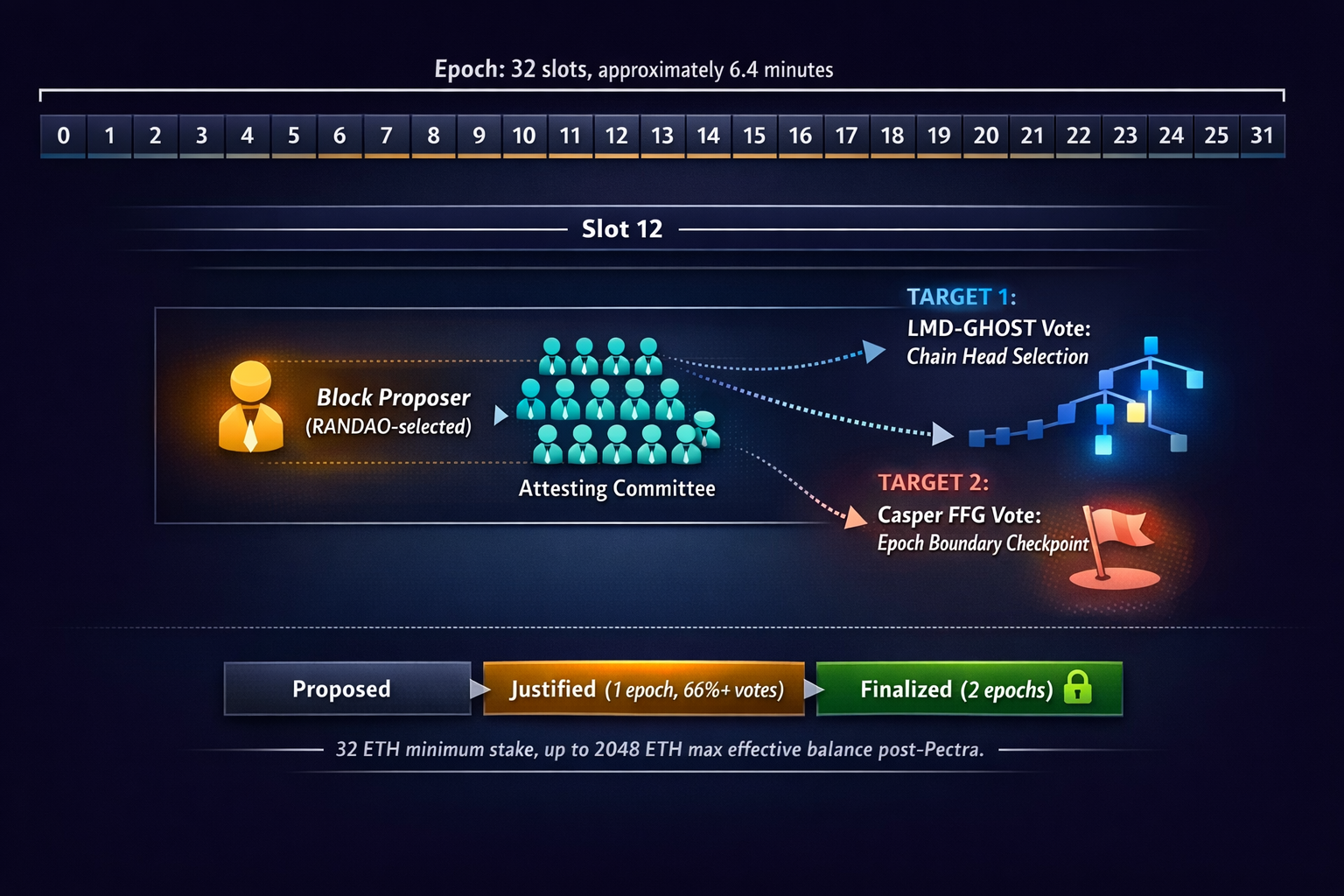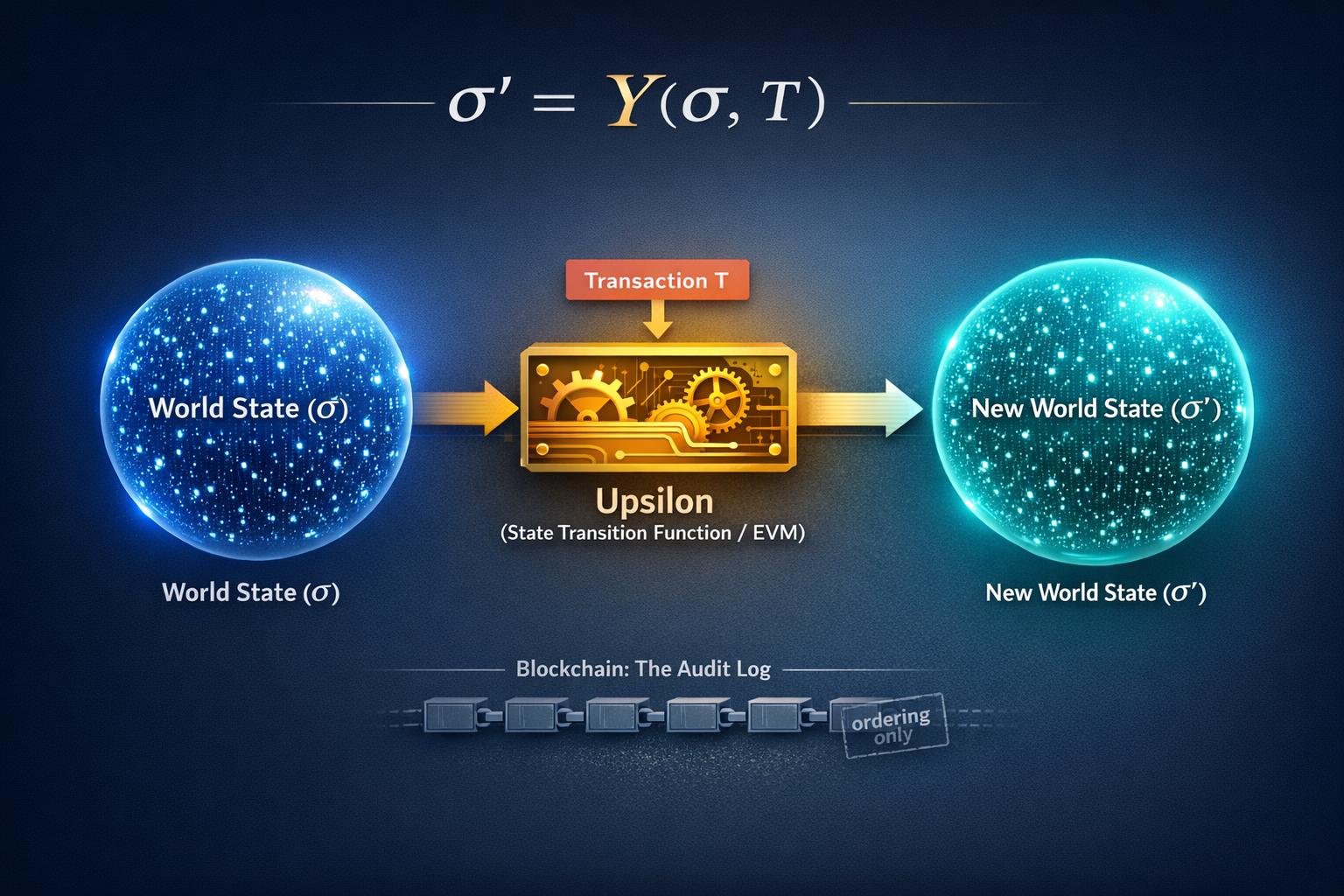
Most mental models of Ethereum are subtly wrong at the root. They frame it as a blockchain that happens to run smart contracts. Invert that framing and you get far closer to reality: Ethereum is a deterministic state machine whose sole purpose is to compute a single, globally agreed-upon state transition function, and the blockchain—consensus—merely selects which transitions to apply and in what order. The resulting world state, a mapping of every address to its current account data occupying well over 400 GB, is the actual product. Blocks are the audit log. State is the output.
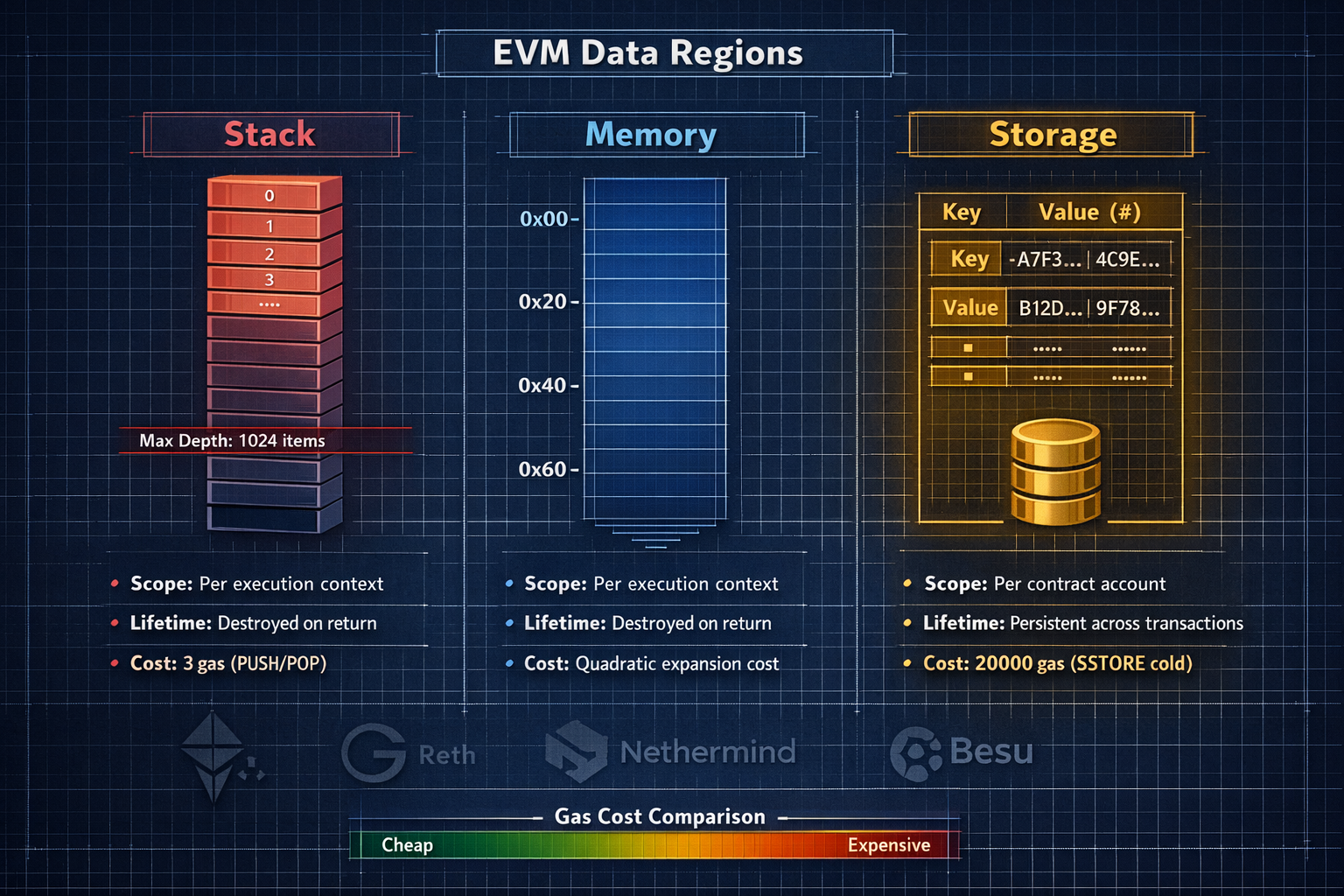
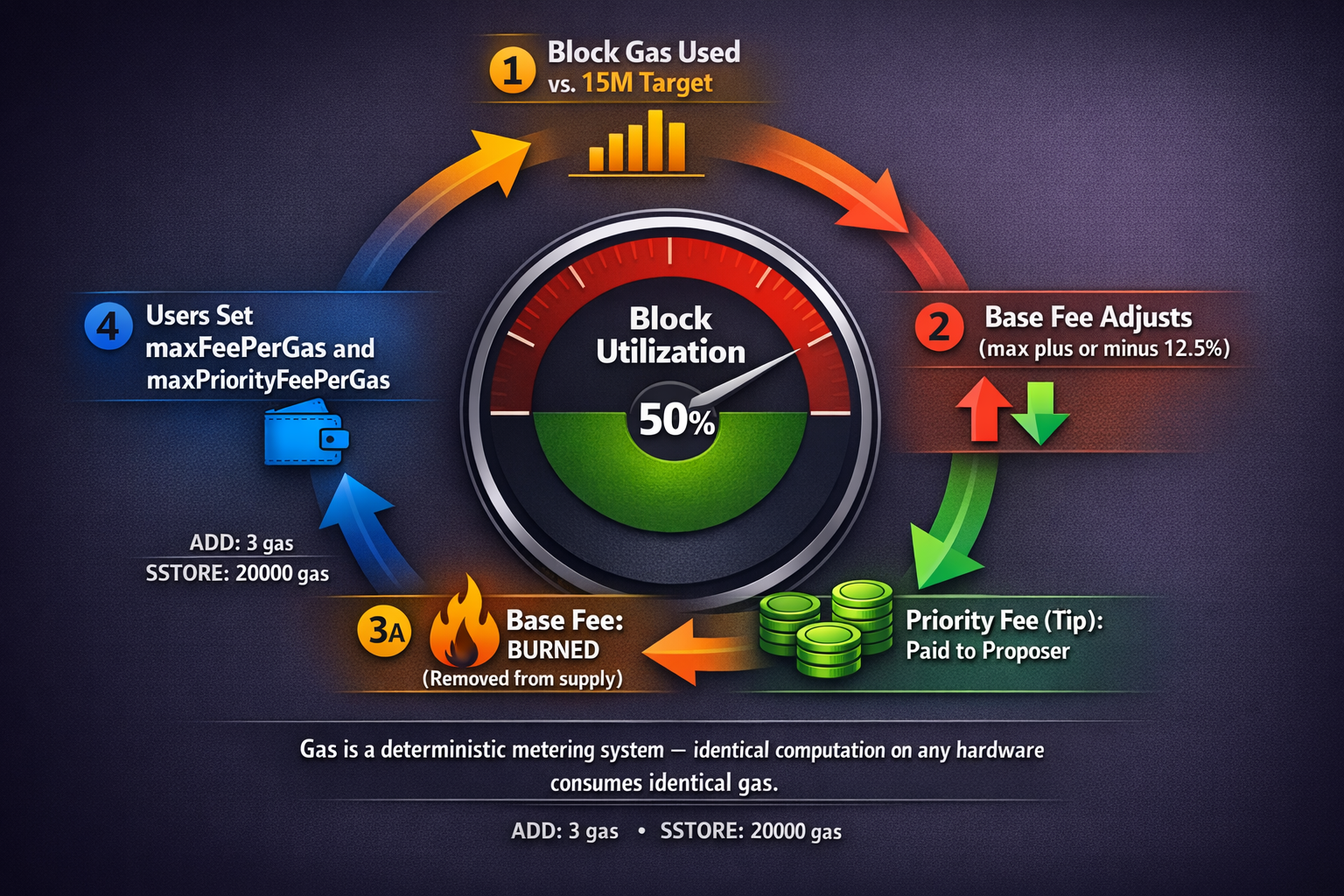
Formally, the system implements σ' = Υ(σ, T), where σ is the world state before a transaction T, Υ is the state transition function (the EVM), and σ' is the world state after. Every full node on the network independently computes this function for every transaction in every block and arrives at the identical σ'. If they don't, they're on a different chain. That determinism is non-negotiable—it is enforced by gas metering, fixed opcode semantics, and the consensus protocol—and it is the single property that makes the entire system work.
Contrast this with Bitcoin's UTXO model, which tracks discrete coins. Ethereum tracks accounts with mutable balances, nonces, and in the case of contracts, persistent storage and executable code. A Bitcoin transaction consumes and creates outputs; an Ethereum transaction mutates a global state object. This distinction cascades into every design decision: how gas works, why storage is expensive, why re-entrancy attacks are possible, and why state growth is Ethereum's most pressing long-term scalability constraint.
The conceptual framework for the rest of this article follows the dependency graph of the protocol itself: state structure → transaction-driven execution → consensus that orders and finalises those executions → data layer that stores and proves it all.